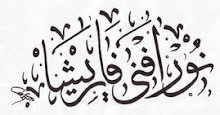
MUHAMMAD, No. 1 The 100, a Ranking of the Most Influential Persons in
 History by Michael H. Hart
My choice of Muhammad to lead the list of the world's most influential persons may surprise some readers and may be questioned by others, but he was the only man in history who was supremely successful on both the religious and secular levels. Of humble origins, Muhammad founded and promulgated one of the world's great religions, and became an immensely effective political leader. Today, thirteen centuries after his death, his influence is still powerful and pervasive. The majority of the persons in this book had the advantage of being born and raised in centers of civilization, highly cultured or politically pivotal nations. Muhammad, however, was born in the year 570, in the city of Mecca, in southern Arabia, at that time a backward area of the world, far from the centers of trade, art, and learning. Orphaned at age six, he was reared in modest surroundings. Islamic tradition tells us that he was illiterate. His economic position improved when, at age twenty-five, he married a wealthy widow. Nevertheless, as he approached forty, there was little outward indication that he was a remarkable person. Most Arabs at that time were pagans, who believed in many gods. There were, however, in Mecca, a small number of Jews and Christians; it was from them no doubt that Muhammad first learned of a single, omnipotent God who ruled the entire universe. When he was forty years old, Muhammad became convinced that this one true God (Allah) was speaking to him, and had chosen him to spread the true faith. For three years, Muhammad preached only to close friends and associates. Then, about 613, he began preaching in public. As he slowly gained converts, the Meccan authorities came to consider him a dangerous nuisance. In 622, fearing for his safety, Muhammad fled to Medina (a city some 200 miles north of Mecca), where he had been offered a position of considerable political power. This flight, called the Hegira, was the turning point of the Prophet's life. In Mecca, he had had few followers. In Medina, he had many more, and he soon acquired an influence that made him a virtual dictator. During the next few years, while Muhammad's following grew rapidly, a series of battles were fought between Medina and Mecca. This was ended in 630 with Muhammad's triumphant return to Mecca as conqueror. The remaining two and one-half years of his life witnessed the rapid conversion of the Arab tribes to the new religion.
My choice of Muhammad to lead the list of the world's most influential persons may surprise some readers and may be questioned by others, but he was the only man in history who was supremely successful on both the religious and secular levels. Of humble origins, Muhammad founded and promulgated one of the world's great religions, and became an immensely effective political leader. Today, thirteen centuries after his death, his influence is still powerful and pervasive. The majority of the persons in this book had the advantage of being born and raised in centers of civilization, highly cultured or politically pivotal nations. Muhammad, however, was born in the year 570, in the city of Mecca, in southern Arabia, at that time a backward area of the world, far from the centers of trade, art, and learning. Orphaned at age six, he was reared in modest surroundings. Islamic tradition tells us that he was illiterate. His economic position improved when, at age twenty-five, he married a wealthy widow. Nevertheless, as he approached forty, there was little outward indication that he was a remarkable person. Most Arabs at that time were pagans, who believed in many gods. There were, however, in Mecca, a small number of Jews and Christians; it was from them no doubt that Muhammad first learned of a single, omnipotent God who ruled the entire universe. When he was forty years old, Muhammad became convinced that this one true God (Allah) was speaking to him, and had chosen him to spread the true faith. For three years, Muhammad preached only to close friends and associates. Then, about 613, he began preaching in public. As he slowly gained converts, the Meccan authorities came to consider him a dangerous nuisance. In 622, fearing for his safety, Muhammad fled to Medina (a city some 200 miles north of Mecca), where he had been offered a position of considerable political power. This flight, called the Hegira, was the turning point of the Prophet's life. In Mecca, he had had few followers. In Medina, he had many more, and he soon acquired an influence that made him a virtual dictator. During the next few years, while Muhammad's following grew rapidly, a series of battles were fought between Medina and Mecca. This was ended in 630 with Muhammad's triumphant return to Mecca as conqueror. The remaining two and one-half years of his life witnessed the rapid conversion of the Arab tribes to the new religion.
When Muhammad died, in 632, he was the effective ruler of all of southern Arabia. The Bedouin tribesmen of Arabia had a reputation as fierce warriors. But their number was small; and plagued by disunity and internecine warfare, they had been no match for the larger armies of the kingdoms in the settled agricultural areas to the north. However, unified by Muhammad for the first time in history, and inspired by their fervent belief in the one true God, these small Arab armies now embarked upon one of the most astonishing series of conquests in human history. To the northeast of Arabia lay the large Neo-Persian Empire of the Sassanids; to the northwest lay the Byzantine, or Eastern Roman Empire, centered in Constantinople. Numerically, the Arabs were no match for their opponents. On the field of battle, though, the inspired Arabs rapidly conquered all of Mesopotamia, Syria, and Palestine. By 642, Egypt had been wrested from the Byzantine Empire, while the Persian armies had been crushed at the key battles of Qadisiya in 637, and Nehavend in 642. But even these enormous conquests, which were made under the leadership of Muhammad's close friends and immediate successors, Ali, Abu Bakr and 'Umar ibn al-Khattab, did not mark the end of the Arab advance. By 711, the Arab armies had swept completely across North Africa to the Atlantic Ocean There they turned north and, crossing the Strait of Gibraltar, overwhelmed the Visigothic kingdom in Spain.
For a while, it must have seemed that the Moslems would overwhelm all of Christian Europe. However, in 732, at the famous Battle of Tours, a Moslem army, which had advanced into the center of France, was at last defeated by the Franks. Nevertheless, in a scant century of fighting, these Bedouin tribesmen, inspired by the word of the Prophet, had carved out an empire stretching from the borders of India to the Atlantic Ocean-the largest empire that the world had yet seen. And everywhere that the armies conquered, large-scale conversion to the new faith eventually followed. Now, not all of these conquests proved permanent. The Persians, though they have remained faithful to the religion of the Prophet, have since regained their independence from the Arabs. And in Spain, more than seven centuries of warfare, finally resulted in the Christians reconquering the entire peninsula. However, Mesopotamia and Egypt, the two cradles of ancient civilization, have remained Moslem, as has the entire coast of North Africa. The new religion, of course, continued to spread, in the intervening centuries, far beyond the borders of the original Moslem conquests. Currently it has tens of millions of adherents in Africa and Central Asia and even more in Pakistan and northern India, and in Indonesia. In Indonesia, the new faith has been a unifying factor. In the Indian subcontinent, however, the conflict between Moslems and Hindus is still a major obstacle to unity.
How, then, is one to assess the overall impact of Muhammad on human history? Like all religions, Islam exerts an enormous influence upon the lives of its followers. It is for this reason that the founders of the world's great religions all figure prominently in this book. Since there are roughly twice as many Christians as Moslems in the world, it may initially seem strange that Muhammad has been ranked higher than Jesus. There are two principal reasons for that decision. First, Muhammad played a far more important role in the development of Islam than Jesus did in the development of Christianity. Although Jesus was responsible for the main ethical and moral precepts of Christianity (insofar as these differed from Judaism), St. Paul was the main developer of Christian theology, its principal proselytizer, and the author of a large portion of the New Testament. Muhammad, however, was responsible for both the theology of Islam and its main ethical and moral principles. In addition, he played the key role in proselytizing the new faith, and in establishing the religious practices of Islam. Moreover, he is the author of the Moslem holy scriptures, the Koran, a collection of certain of Muhammad's insights that he believed had been directly revealed to him by Allah. Most of these utterances were copied more or less faithfully during Muhammad's lifetime and were collected together in authoritative form not long after his death. The Koran therefore, closely represents Muhammad's ideas and teachings and to a considerable extent his exact words. No such detailed compilation of the teachings of Christ has survived. Since the Koran is at least as important to Moslems as the Bible is to Christians, the influence of Muhammad through the medium of the Koran has been enormous. It is probable that the relative influence of Muhammad on Islam has been larger than the combined influence of Jesus Christ and St. Paul on Christianity.
On the purely religious level, then, it seems likely that Muhammad has been as influential in human history as Jesus. Furthermore, Muhammad (unlike Jesus) was a secular as well as a religious leader. In fact, as the driving force behind the Arab conquests, he may well rank as the most influential political leader of all time. Of many important historical events, one might say that they were inevitable and would have occurred even without the particular political leader who guided them. For example, the South American colonies would probably have won their independence from Spain even if Simon Bolivar had never lived. But this cannot be said of the Arab conquests. Nothing similar had occurred before Muhammad, and there is no reason to believe that the conquests would have been achieved without him. The only comparable conquests in human history are those of the Mongols in the thirteenth century, which were primarily due to the influence of Genghis Khan. These conquests, however, though more extensive than those of the Arabs, did not prove permanent, and today the only areas occupied by the Mongols are those that they held prior to the time of Genghis Khan. It is far different with the conquests of the Arabs. From Iraq to Morocco, there extends a whole chain of Moslem nations united not merely by their faith in Islam, but also by their Arabic language, history, and culture.
The centrality of the Koran in the Moslem religion and the fact that it is written in Arabic have probably prevented the Arab language from breaking up into mutually unintelligible dialects, which might otherwise have occurred in the intervening thirteen centuries. Differences and divisions between these Arab states exist, of course, and they are considerable, but the partial disunity should not blind us to the important elements of unity that have continued to exist. For instance, neither Iran nor Indonesia, both oil-producing states and both Islamic in religion joined in the oil embargo of the winter of 1973-74. It is no coincidence that all of the Arab states, and only the Arab states, participated in the embargo. We see, then, that the Arab conquests of the seventh century have continued to play an important role in human history, down to the present day. It is this unparalleled combination of secular and religious influence which I feel entitles Muhammad to be considered the most influential single figure in human history.
Ref: http://www.amaana.org/ismailim.html